
The Backyard Trampoline: A California Dream or a Hidden Nightmare?
The Millers, a family out in Orange County, had just installed a brand-new trampoline for their twin ten-year-olds. It was a birthday present, a gleaming circle of spring-loaded joy in their perfectly manicured backyard. Every afternoon, the kids and their friends would be out there, bouncing high, laughing loud. It felt like the quintessential California childhood, sunshine and endless play. Until it wasn’t.
One Saturday, during a neighborhood get-together, one of the kids — not a Miller, but a friend from down the street — attempted a double front flip. He landed wrong. A sickening snap. The next few hours were a blur of paramedics, an ambulance siren fading into the distance, and the chilling news from the emergency room: a fractured tibia, severe enough to require surgery and extensive physical therapy.
Suddenly, the Millers’ dream backyard became a source of immense stress. Their homeowner’s policy, they quickly found out, had a liability limit of $500,000. That might sound like a lot of money. But here’s where it gets interesting. The injured child’s parents, understandably upset and facing mounting medical bills, weren’t just looking for hospital costs. They were talking about lost wages for therapy appointments, pain and suffering, and the potential long-term impact on their son’s athletic future. Their lawyer sent a letter, hinting at damages well over a million dollars. The Millers felt a cold dread creep in. Would they lose their house? Their savings? Everything they’d worked for in the Golden State?
When Your Homeowner’s Policy Just Isn’t Enough
Most California homeowners get a thrill from their property, whether it’s a craftsman in Pasadena or a ranch in the Sacramento Valley. We think our standard homeowner’s insurance has us covered. And for many things, it does. A small kitchen fire? Covered. A slip-and-fall on your icy porch (rare in most of California, but you get the idea)? Probably covered, up to a point.
But then there are items that insurers eye with a certain suspicion. Things that inherently carry a higher risk of serious injury. Swimming pools are one. Aggressive dog breeds are another. And yes, trampolines are right up there.
Why do insurers worry so much about trampolines? Honestly, they’re accident magnets. The Consumer Product Safety Commission has reported hundreds of thousands of trampoline-related injuries over the years. We’re talking broken bones, sprains, head injuries, even paralysis. And when those injuries happen on *your* property, *you* can be held responsible. It’s called personal liability.
Your standard homeowner’s policy *will* offer some liability protection. Typically, it’s between $100,000 and $500,000. For something relatively minor, like a sprained ankle that needs a few doctor visits, that’s often plenty. But a severe injury – say, a spinal cord issue that leaves someone paralyzed, or a traumatic brain injury – those costs can easily skyrocket into the millions. We’ve seen settlements and judgments in California that far exceed a half-million dollars. One lawsuit in the Inland Empire for a trampoline injury settled for well over $1.5 million just last year. That’s not the whole story. If your homeowner’s policy maxes out at $500,000 and you’re sued for $2 million, who pays the other $1.5 million? You do. Out of your own pocket. Your savings, your investments, maybe even your future earnings could be on the line.

The California Insurance Market and Trampoline Troubles
Getting insurance in California has become a bit of a headache lately. Between the increasing frequency of wildfires — remember the 2025 LA fires? — and other natural disasters, insurers like State Farm, Farmers, and AAA have been pulling back or raising rates significantly. It’s just a tougher market all around.
Which brings up something most people miss. Some insurance companies will outright refuse to cover homes with trampolines. They see the risk as too high, especially in a litigious state like California. Others might offer coverage but with specific exclusions. They might say, “We’ll cover your house, but any trampoline-related injury? Not our problem.” Or they might require specific safety measures, like netting enclosures, ground-level installation, or even a signed waiver from anyone who jumps. You’ve got to read the fine print, every single word.
Even if your primary homeowner’s policy *does* cover trampoline liability, it’s still subject to those relatively low limits. That’s where an umbrella policy steps in.
Umbrella Insurance: Your Extra Layer of Protection
Think of an umbrella policy as an extra shield, layered on top of your existing homeowner’s and auto insurance liability limits. It’s designed to kick in when those underlying policies are exhausted. So, if the Millers’ homeowner’s policy paid out its maximum $500,000 for that trampoline injury, an umbrella policy would then cover the remaining $1 million or $2 million – whatever the judgment was – up to its own much higher limits.
Typically, umbrella policies start at $1 million in coverage and can go up to $5 million, $10 million, or even more. And they’re surprisingly affordable for the amount of protection they offer. We’re not talking thousands of dollars a month. Often, you can get a million dollars in umbrella coverage for just a few hundred dollars a year. That’s a tiny fraction of what a multi-million dollar lawsuit could cost you.
But wait — does an umbrella policy *always* cover a trampoline injury? The short answer is yes, usually. The real answer is more complicated. Most umbrella policies are designed to broaden and extend your existing liability coverage. If your underlying homeowner’s policy specifically *excludes* trampoline liability, some umbrella policies might follow that exclusion. That’s why it’s absolutely essential to talk to an insurance professional who understands the specific wording of both your homeowner’s and umbrella policies. You need to make sure there aren’t any gaps.
For example, a policy might cover general personal liability, which would include a trampoline incident, but only if you’ve met certain safety criteria. Maybe you need to have a safety net. Maybe you need a sign with rules. It really depends on the insurer and the specifics of your policy. This isn’t a “set it and forget it” kind of thing.
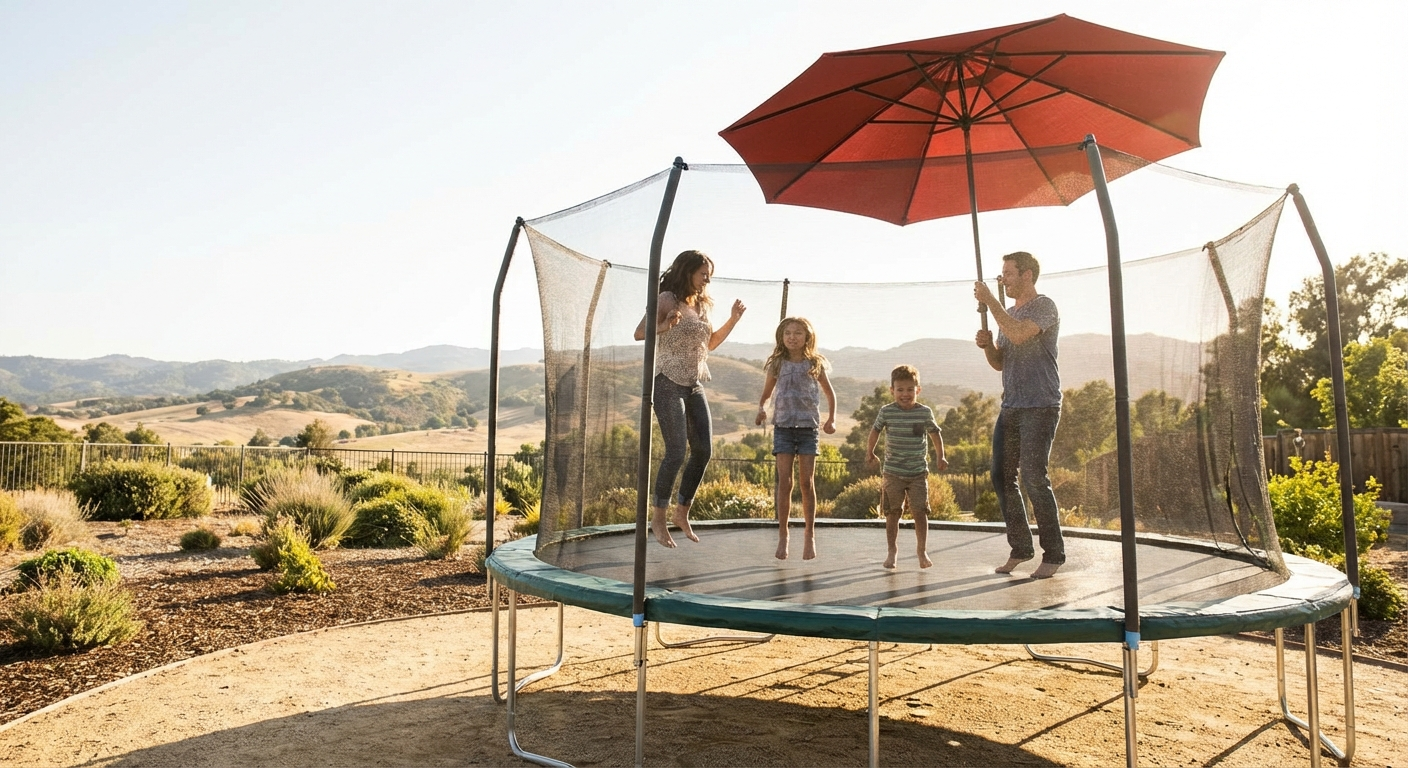
The Peace of Mind for California Families
Imagine the Millers, facing that multi-million dollar lawsuit. If they had an umbrella policy, that cold dread wouldn’t be quite so chilling. They’d know that after their homeowner’s policy paid its maximum, their umbrella would step in, protecting their hard-earned assets. That’s a significant difference. It’s the difference between potentially losing everything and simply letting your insurance company handle a devastating financial blow.
Many people in California, especially those with assets like a home in Malibu, a vacation rental in Lake Tahoe, or a growing investment portfolio, underestimate their exposure to liability. A trampoline is just one example. What if your teenager crashes the family car and injures someone seriously? What if your dog bites someone? What if you accidentally slander someone online? An umbrella policy covers a wide range of personal liability claims that can quickly exceed your underlying policy limits. It’s for those “what if” scenarios that could truly derail your financial future.
For most families, especially those with kids, a trampoline can be a source of incredible fun. You don’t want to live in fear of what *might* happen. But you also don’t want to be financially ruined if the unthinkable occurs. That’s where smart planning comes in.
If you own a trampoline, or are thinking about getting one, you really need to review your current insurance situation. Don’t just assume you’re covered. Talk to an expert who can walk you through the specifics for your home in San Diego, your rental property in Santa Barbara, or your family home in Fresno.
Karl Susman of California Umbrella Insurance has helped countless California families understand their liability risks – especially around things like trampolines. With his CA License #OB75129, Karl and his team know the ins and outs of the California insurance market and can help you find the right umbrella coverage to protect your assets.
Don’t wait for a crisis to discover you’re underinsured. Get a quote today and gain that vital peace of mind.
Click here to get a personalized umbrella insurance quote for your California home.
Frequently Asked Questions About Trampolines and Umbrella Insurance
Q: Will my homeowner’s insurance automatically cover trampoline injuries?
A: Not always. Many homeowner’s policies have specific exclusions for trampolines or require certain safety features to be in place. Some insurers won’t cover homes with trampolines at all. You really need to check your specific policy documents and talk to your agent.
Q: How much additional liability coverage does an umbrella policy provide?
A: Umbrella policies typically start at $1 million in additional liability coverage, and you can often purchase policies with limits of $2 million, $5 million, or even more. This coverage sits on top of your existing homeowner’s and auto policy limits.
Q: Is an umbrella policy expensive for California homeowners?
A: Compared to the amount of protection it offers, umbrella insurance is quite affordable. A $1 million policy might cost a few hundred dollars per year. The exact cost depends on factors like your location (e.g., Los Angeles vs. a quieter rural area), your driving record, and the underlying liability limits of your other policies.
Q: What steps can I take to reduce the risk of trampoline injuries?
A: Always install a safety net enclosure, place the trampoline away from trees and structures, supervise children at all times, enforce a “one jumper at a time” rule, and consider placing impact-absorbing material around the base. These steps not only help prevent injuries but might also make it easier to get insurance coverage.
Q: Should I get an umbrella policy even if I don’t have a trampoline?
A: Absolutely. While trampolines are a specific risk, an umbrella policy protects you from a wide range of personal liability claims – like a serious car accident, a dog bite, or even a guest getting injured on your property for any reason. If you have significant assets, it’s a smart layer of protection for any unexpected event.
Ready to explore your options and protect your family’s future?
Get your California umbrella insurance quote today!
This article is for informational purposes only and does not constitute financial advice.